
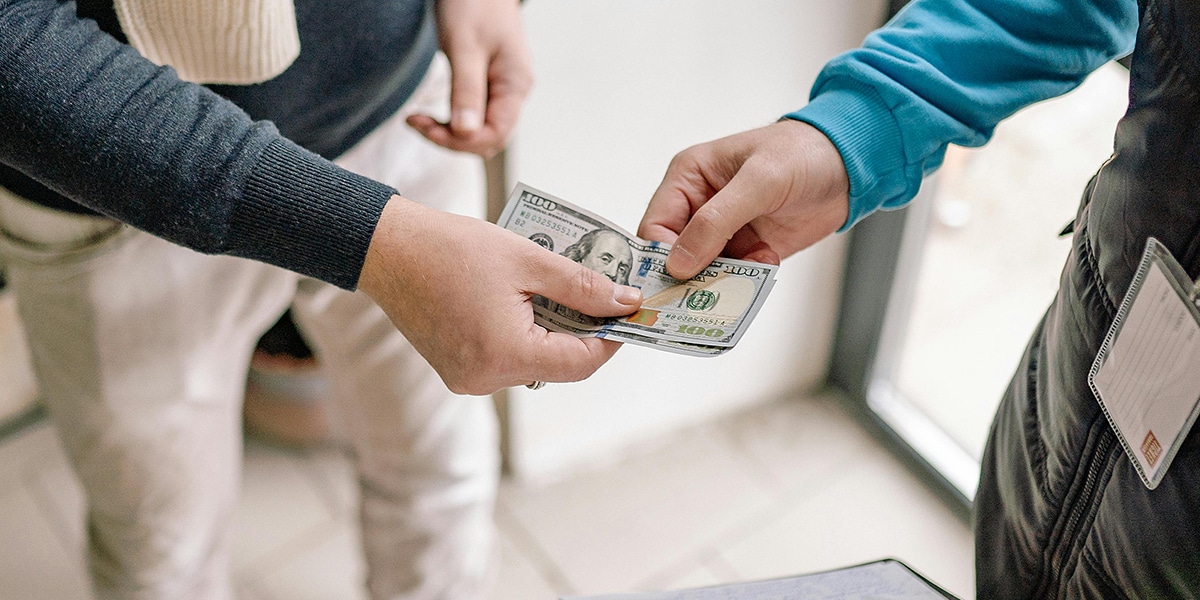
With the rise of card and contactless payments, many fear that the end is nigh for cash. Indeed, some countries, such as Sweden may soon become cashless, as their cash circulation has dropped by 27.5% in the last four years and ATM withdrawals have dropped by 50%. But, what of the U.S.? While it is predicted that by 2024, debit card payments will account for over half of all payments in the U.S., Volumatic asks, does this mean cash is now redundant, or is cash here to stay?
Seven Reasons Why Cash is Here to Stay
1. Low Cost of Processing
For businesses, the cost of processing payment can be a critical factor in deciding which payment options to offer to their customers. Cash is still the cheapest payment option to process. On average, a cash payment costs 0.15% of the transaction value to process. Debit card payments cost 0.22% of the transaction value while processing a credit card payment costs 0.79% of the transaction.
2. Budgeting
Many debt advice charities encourage consumers only to use cash and to resist the temptation of credit and overdrafts by cutting up their cards and only using cash. Cash can make it easier to budget and to stick only buying what you can afford to with the money in your hand. This is ideal for those who may not have the self-control when it comes to using cards for purchases.
3. Anonymity
Debit, credit and online transactions can all be easily tracked and monitored, meaning many people from your spouse to the government can review your accounts and spending. Having the right to privacy is essential, and having all transactions available to find can infringe on this privacy.
Cash helps to maintain privacy and your right to a private life, without your occasional indulgence or buying a gift for someone being discovered.
4. Accessibility
For people with physical or cognitive disabilities, cash can be more accessible. Using screens and entering digits for a PIN may be difficult for some people. Whereas physical money can be easier to handle, use and understand.
5. Reliability
In remote locations or during power outages, there is potential for card payments not to be accepted. Electronic systems can fail, payment systems may need rebooting during problems, whereas cash doesn’t rely on other systems to work. In fact as much as 40% of the U.S. population say they need to carry cash because the shops and services they regularly use do not, or are not able to take digital payments.
6. Finality
When it comes to payment, some forms can have a delay, which means you may have potential debt hanging over you or payments to budget for that may not have been processed. With cash payment, you pay immediately, and there is a sense of finality with your transactions. There is no bill to pay later or a period where you wait for funds to clear. This serves as an advantage for both businesses and consumers.
7. A Safety Net
With recent banking crises, many individuals have been distrusting of banks. Along with issues such as poor interest rates, many people are choosing to hoard their cash and storing it physically, rather than depositing it into a bank account. This cash could be hidden in homes or in a safety deposit box.
While people may not be achieving a financial benefit such as capitalizing on interest rates by hoarding, having money close to hand does provide people with a sense of security and well as providing a safety net for emergency expenses.
Are We Close to Becoming a Cashless Society?
Currently, research shows that up to 17% of the population would not be able to manage in a cashless society. This is for a variety of reasons such as not being eligible for a bank account to disabilities or debts. As a result, businesses and the government must ensure that there is the infrastructure in place to manage cash. Furthermore, payment options need to be accessible to all consumers.
If society does want to move towards a cashless system, then better infrastructure needs to be created to ensure digital payments are accessible to every single individual across the U.S., regardless of age or ability.
While it is true that digital payments are increasing, so is the number of notes in circulation. These numbers continue to increase year on year; a clear indication that cash is here to stay.


